
What’s Hamlet Doing in an Icon?
Plus recently published poems and turn-that-frown-upside-down Dostoevsky

Dear friends,
I have a lot to share today, so without further ado…
From the Writing Desk
At the end of 2024, I finally finished my “forever” novel, Death and Devices! This was the 14th major rewrite in five years, and like Bilbo among the dwarves, it was my lucky number! The setting is alive, the characters are in tension, and the pacing flows.
So it’s pitching season!
While circulating my novel, I’m returning to my first love: poetry. I’m working on a full chapbook, but today I want to share two stand-alones that don’t fall within the chapbook theme.
The first, “Remains of the Day,” was featured as one of three winning poems in Verdurous Glooms’ first annual triolet competition this past Theophany. You can read my poem below, but I recommend also following the link to the Verdurous Glooms Substack so you can discover a clever and generous poet celebrating traditional forms.
Remains of the Day
Of all the things we might have said,
we said them all but one.
I keep a list inside my head
of all the things we might have said.
We might have said (before we’re dead)...
But what’s undone is done.
Of all the things we might have said,
we said them all but one.
In this poem, I’m exploring a theme that has fascinated me ever since I read “The Love Song of J. Alfred Prufrock”—the theme of non-action as action (a theme also baked into my forthcoming book!). The repetition of the triolet structure lends itself to the circular thought patterns that lead to paralysis and abdication of will, as well as the illusion of infinite time until, suddenly, there is no time.

Huge thanks to J. Tullius for introducing me to this poetic form, which has inspired a break-through in the structure for my sequel novel!
Many thanks also to Cereal City Review for publishing my poem, “Finding the Found”, which I wrote some years ago when glutting myself on Hopkins and Heaney ;). I discovered this publication through Paul Kingsnorth, who was intrigued by its mission to publish “writing where the place is so integral that the narrative wouldn't be the same without it.”
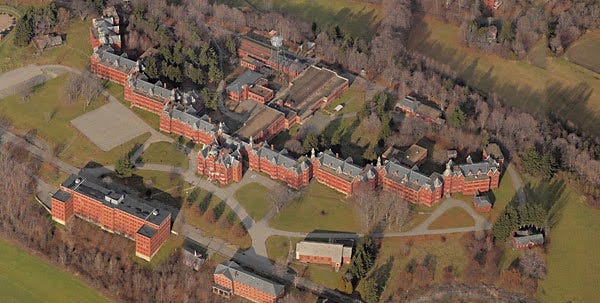
Thematically, this poem reflects another major theme in my novel: the love that grows from attention. As those of you who read my recent post on insane asylum architecture may surmise, place also acts as a character in my novel—much of the plot is driven forward by the influence of Vendler Academy, a Kirkbride insane asylum turned STEM school.
On the Nightstand
When my mother suggested our family re-read The Brothers Karamazov this Lent, I wasn’t too chuffed. Don’t get me wrong—I really enjoy Brothers K. It has softened my heart and deeply affected me. That said, both of my previous readings left me with an impression of a very heavy story, and I wasn’t really ready for that again.
But I’m so glad my sisters peer-pressured me into re-reading!
This time through, my experience of the story is completely different. Whether due to personal maturation, entering a new phase of life, or having become friends with more Russians (looking at you, Nicholas Kotar!), the spiritual depth of the story feels weighted more toward the “joy” side of the “joyful sorrow” scale to which we Orthodox are so fond of referring. For the first time, I’m appreciating the quirky authorial voice and the humor of the characters.
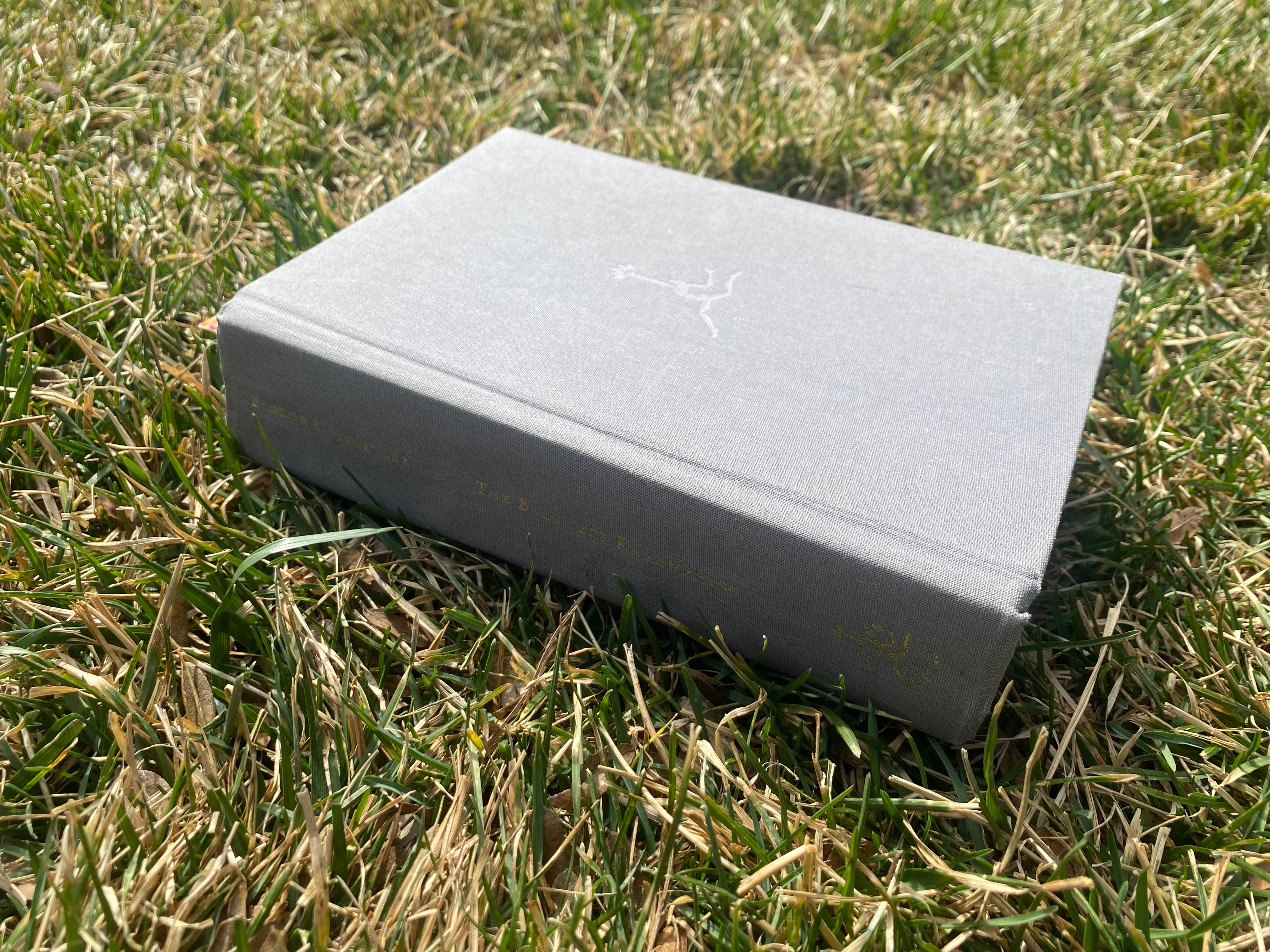
I’m also reminded how refreshing it is to read stories from a variety of times and places, as Dostoevsky’s mastery of third person narrative voice allows for spiritual insight into SO many characters, whereas most modern fiction favors a deep POV that places the story firmly inside one character’s experience of the world.
The length of the novel has also given me an excuse to indulge in the restfulness that comes from leaving my phone in another room and focusing on one thing deeply. Better still, this attitude is translating outside the realm of just reading: I find that my ears are more attentive to hear, my heart more receptive to become, and my hands faster to do. Even the posture of curling up on the sofa to read for hours is awakening a deep magic nostalgic of adolescence that I haven’t enjoyed in far too long.
All of that to say, re-reading old books is a good idea, because you may have both a new and an old experience of them in perfect balance! (Who’d have thought the classics are worth re-reading?! ;)
Carving
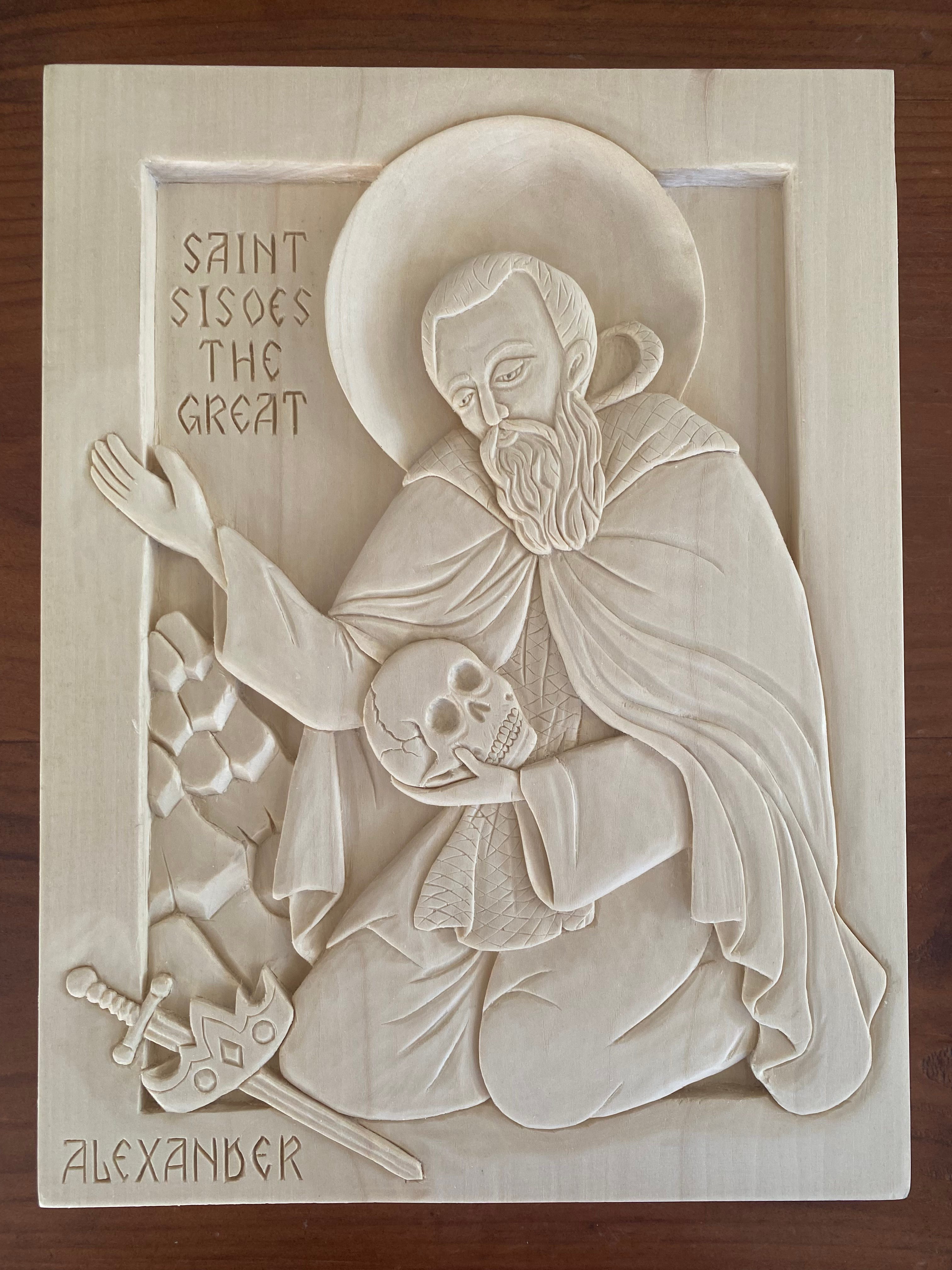
Another shout-out to Jey, who commissioned my latest icon of St. Sisoes the Great.
This is my favorite icon I’ve carved to date. First of all, it was so fun to have a very collaborative design process with Jey, who requested a Hamlet allusion (a variation to the tradition that Aidan Hart was kind enough to give me confidence to try—I’m quite wary of sprinkling in symbolism just ‘cause it’s cool).
A bit about St. Sisoes:
St. Sisoes the Great was an ascetic known for his extreme humility. He pursued the life of prayer in an Egyptian cave sanctified by St. Anthony the Great. One of my favorite anecdotes, recorded here, is as follows:
“When one of the monks asked how he might attain to a constant remembrance of God, Saint Sisoes remarked, ‘That is no great thing, my son, but it is a great thing to regard yourself as inferior to everyone else. This leads to the acquisition of humility.’
Although he maintained on his deathbed that he had not “even begun to repent,” St. Sisoes was counted worthy to be escorted to heaven by St. Anthony, the prophets, the apostles, the angels, and the Lord Himself.
You can hear Fr. Seraphim of Mull Monastery reading the life of this saint here.
Now back to Hamlet.
Although neither my client nor I could find this historical anecdote recorded in St. Sisoes’ life, the iconographic tradition depicts him at the grave of Alexander the Great, contemplating, ‘Seeing you in a grave, I am timid and frightened at your sight and I shed tears from my heart, bringing to my mind the debt that all people have to pay (that is, death), so I will suffer such an end. Ah, ah death, who is the one who can avoid you?’
My client, being a perspicacious and literary fellow, pointed out that this is VERY similar to Hamlet's speech at the grave of Yorick. Looking at Yorick's skeleton, Hamlet says:
HAMLET "Prithee, Horatio, tell me one thing.
HORATIO What's that, my lord?
HAMLET Dost thou think Alexander looked o' this fashion i' the earth?
HORATIO E'en so.
HAMLET And smelt so? pah! (Puts down the skull.)
HORATIO E'en so, my lord.
HAMLET To what base uses we may return, Horatio! Why may not imagination trace the noble dust of Alexander, till he find it stopping a bung-hole?
A remarkable similarity! Hence St. Sisoes holding the skull of Alexander as Hamlet held Yorick’s!
You’ll also notice the inversion of titles: in the eternal reality captured in iconography, St. Sisoes is “the Great” and Alexander is just plain ol’ Alexander, poor fellow. The vestiges of his rule—his crown and sword—are propped on the saint’s knee as if in service to someone greater, while the saint inverts and redirects the gesture to heaven as he raises his right hand in supplication. Likewise, the mountains direct our gaze toward the skull but simultaneously echo the saint’s prayerful gesture back toward Paradise.
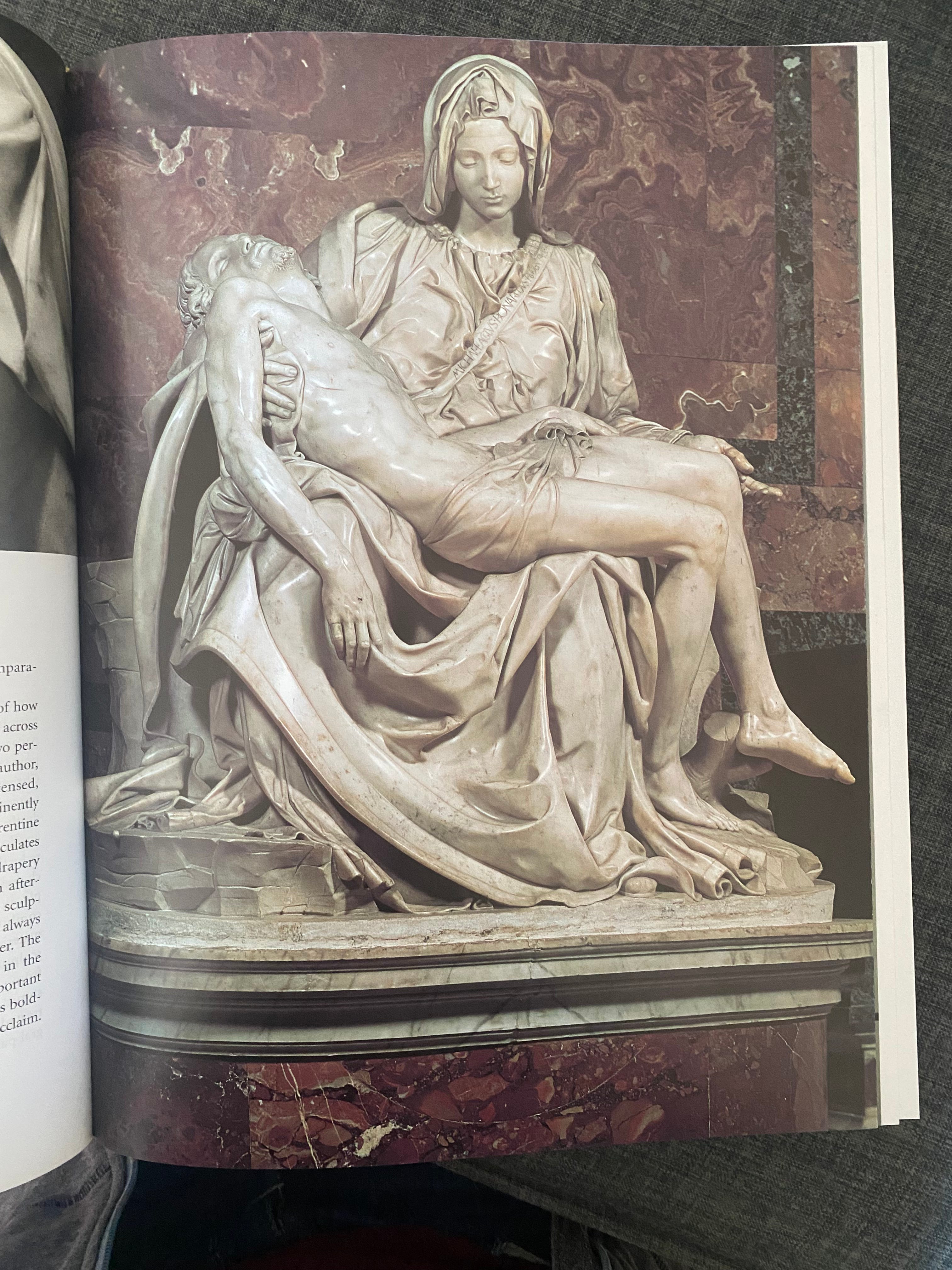
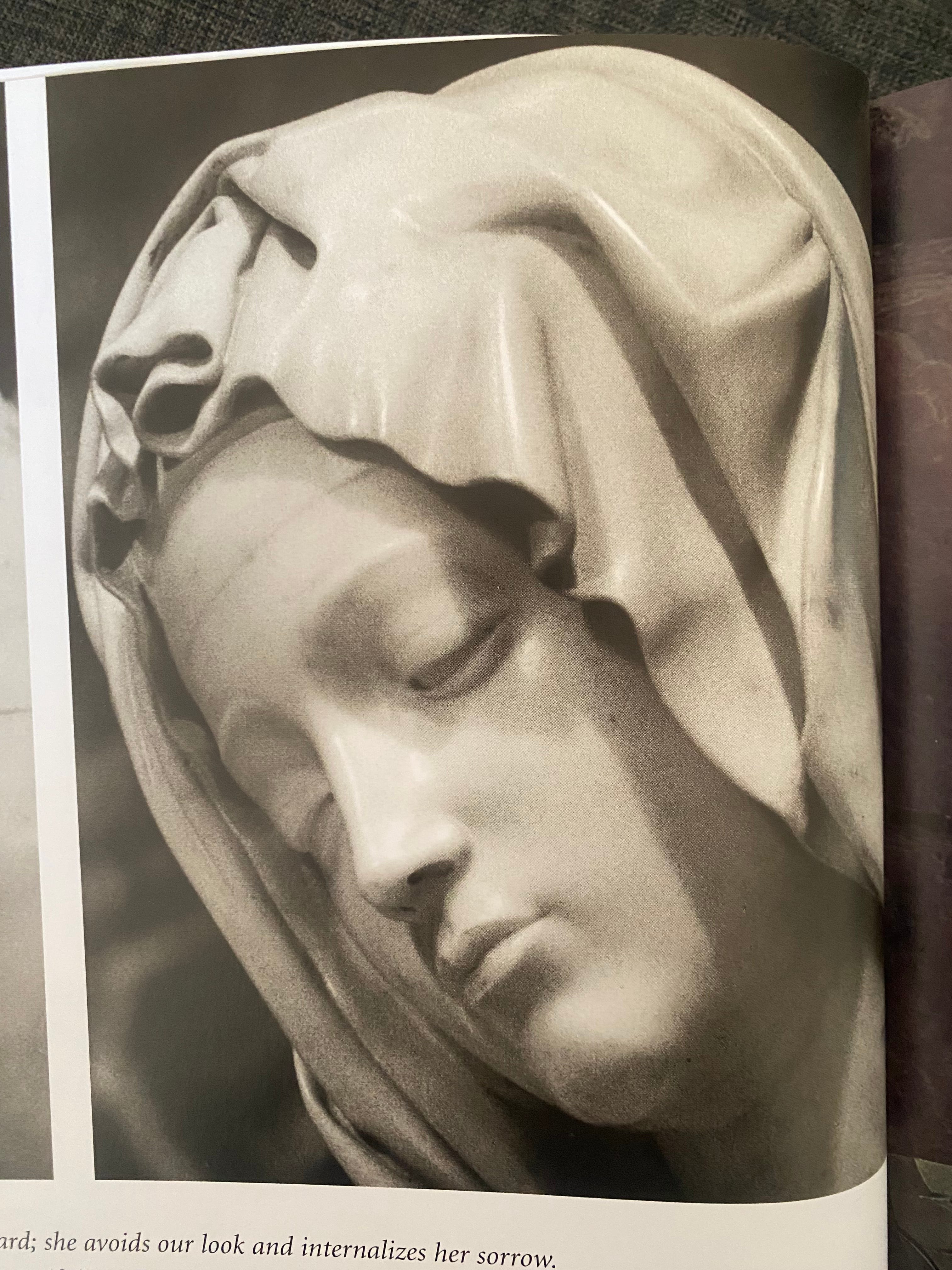
Technically speaking, this was the most complex icon I’ve done, partly because I had to use visual tricks to convey the depth of the skull given its three quarter angle, and partly because the direction of the saint’s gaze demands a half-open eye you’ll see in paintings but not in wood carvings or sculptures. (If you look through Michaelangelo’s sculptures, for example, you’ll notice the pupil and iris are skipped completely under heavily lidded eyes, I assume because there simply isn’t space to capture the detail.)
Thank God and St. Sisoes, though, these elements came together in the end.
Until next time, blessed journey to the resurrection!
Anna
14 is David’s number, and David means “Beloved” - so your 14th version was the beloved version! Fitting 😎
Truly beautiful! I love St. Sisoes and have felt close to him since first hearing the story of his death. I didn’t know about the iconographic tradition depicting him at Alexander’s grave. Thank you!